
 Paul G.
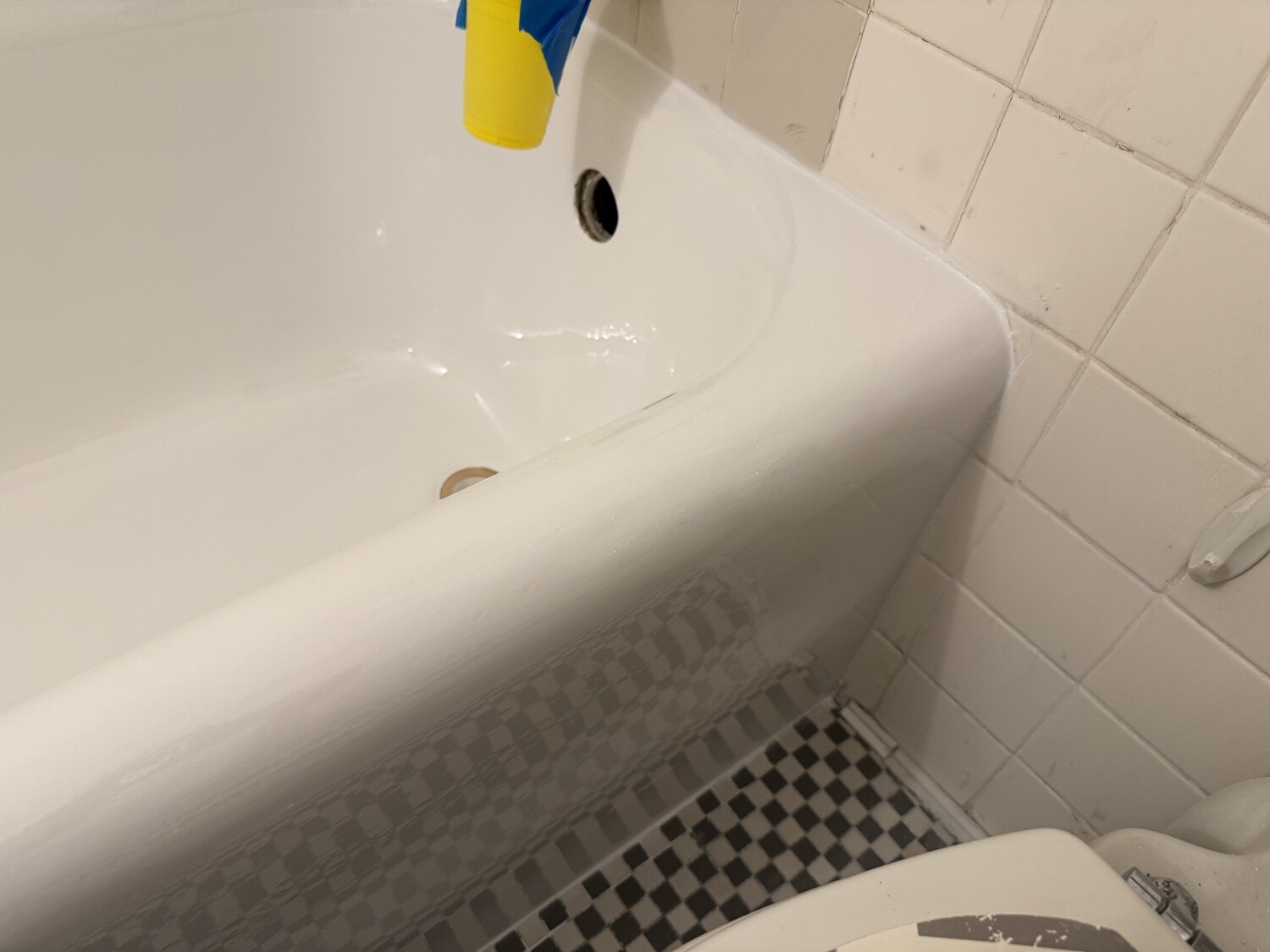
Great bathtub reglazing service! Quick, professional, and my tub looks new. Very happy with the results. Highly recommend!
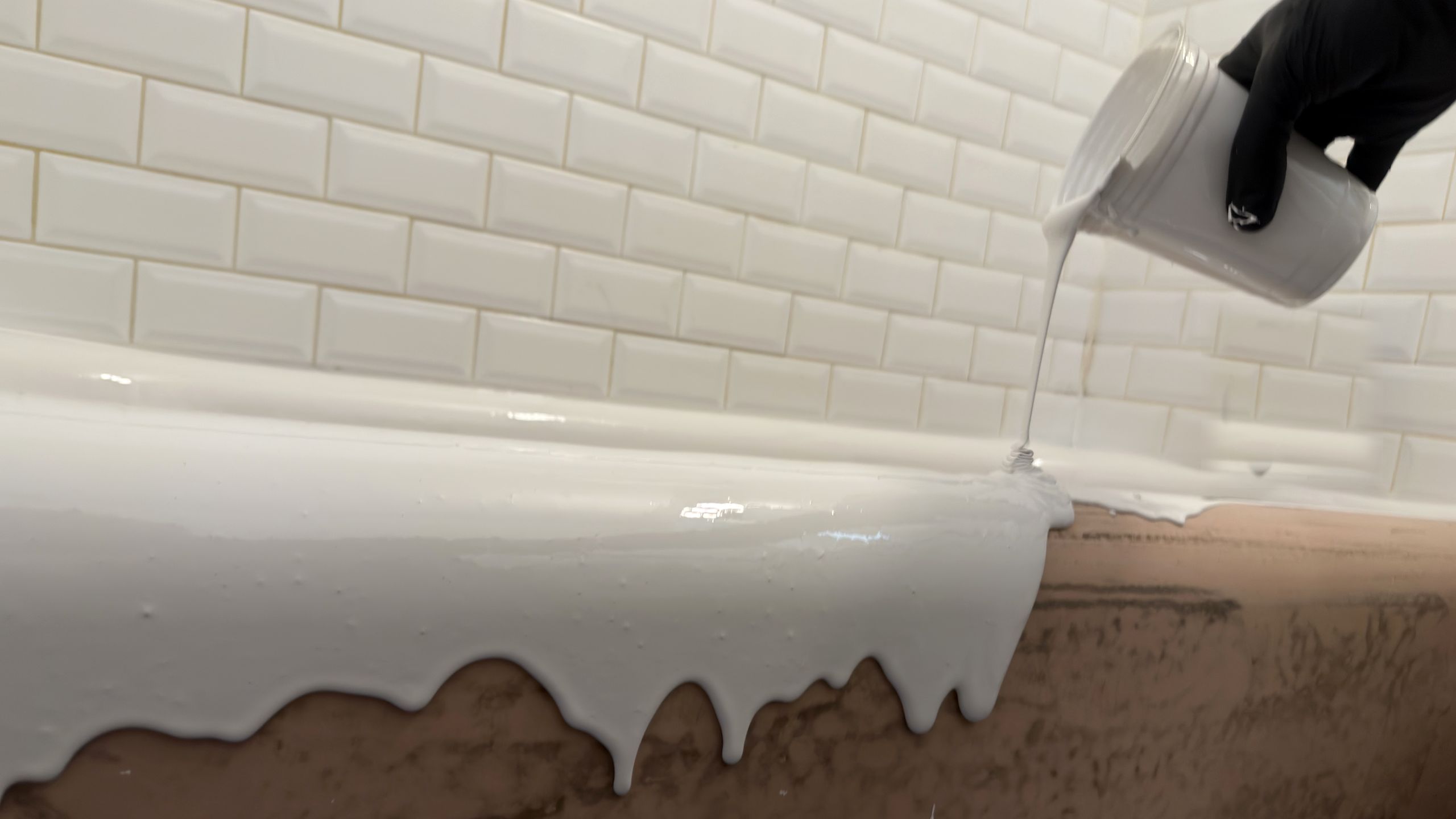

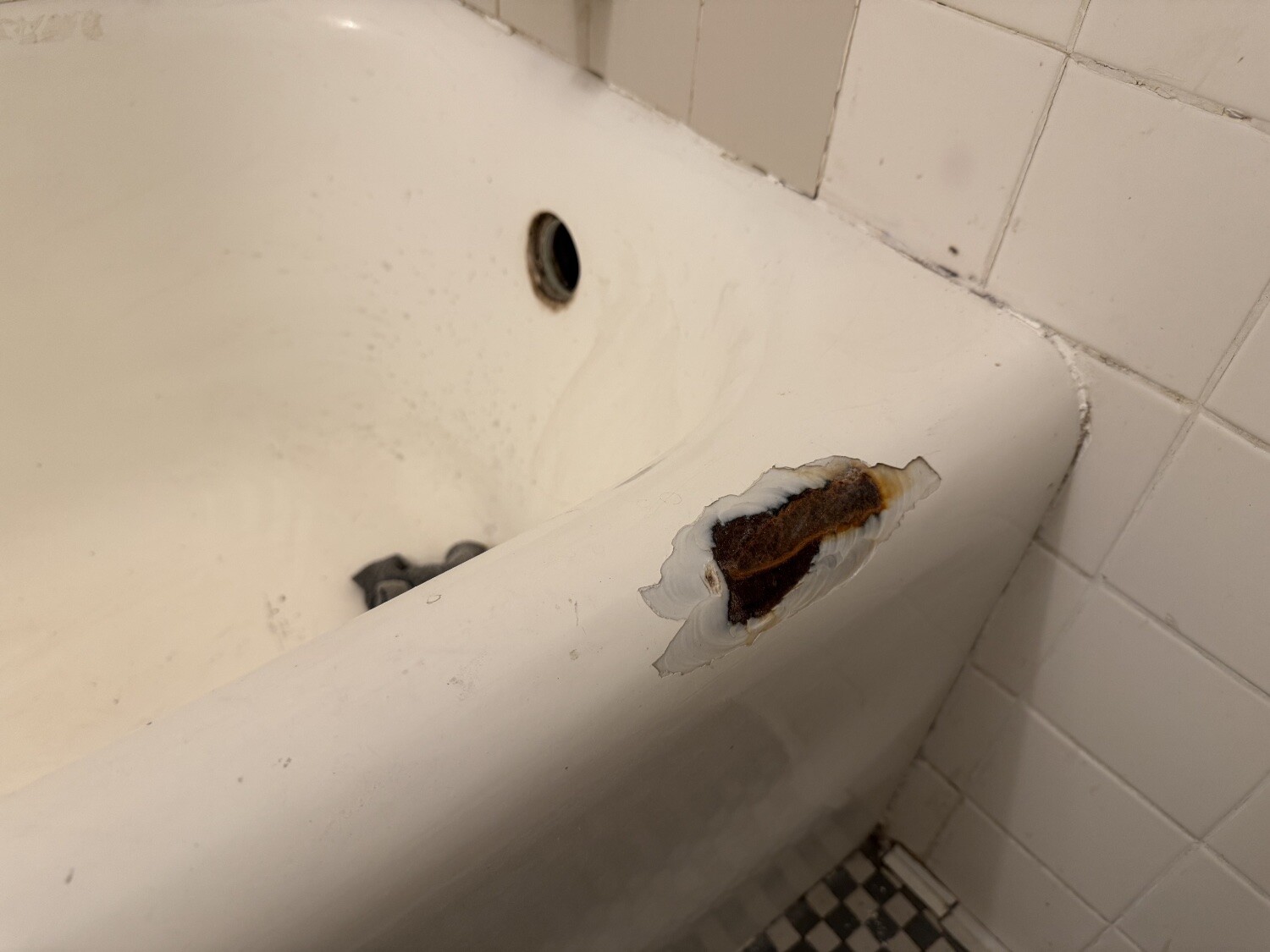
Enameled bathtubs take a lot of damage over the years. The most common is a chip in the enamel — from a dropped shower head, a heavy or sharp object, or a hard knock. Left alone, a chip turns into rust and a growing bare patch.

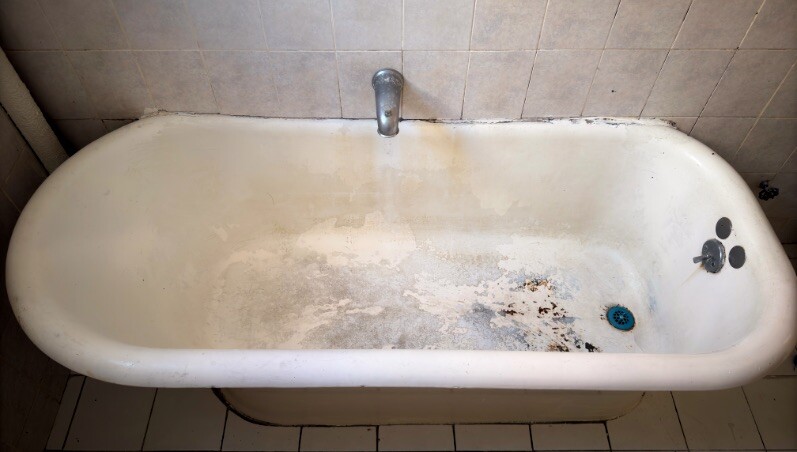
Enamel is hard but brittle, so chips and cracks are common — especially on a tub that has served for decades or has already been refinished once. A few habits go a long way.
A chip is more than cosmetic. Bare metal under it starts to corrode, the damage spreads, and the broken edge of the enamel can be sharp enough to cut. The sooner it’s dealt with, the better.

We don’t offer spot repairs. Patching a single chip is a job for a DIY kit, and the result is temporary. What we do is prepare the whole tub, fill every chip and crack, and pour on a new enamel surface in one visit — about 3–4 hours of work, ready to use the next day.
The result is a tub that looks and feels new, with the chips gone for good and a coating that stands up to the knocks that caused them in the first place. Backed by our 5-year warranty.

Our take
Repairing chips and cracks with the pour-on method is by far the most reliable and durable fix, and it can extend the life of a tub by many years. For a flawless result, the job belongs in the hands of an experienced technician.
 Excellent
★★★★★
5.0
Paul G.
Real tubs from real LA bathrooms — cast iron and steel, refinished with the pour-on method.

 No spray. No fumes cloud. Just a thick, glossy coat poured on by hand 🛁✨
We refinish cast iron and steel tubs with a pour-on coating — rim, walls, bottom and the front apron too. The result is a smooth, even finish that looks and feels like a brand-new tub, without tearing anything out.
Watch it go from worn to white in under a minute 👆
📍 Serving NYC and Chicago
📩 Tap the link in bio for a free quote — or DM us
#bathtubrefinishing #tubrefinishing #bathtubreglazing #pouronbathtub #castirontub
 From worn out to like new ✨ Full bathtub refinishing with a pour-on coating, no spraying. Cast iron and steel tubs only.
Serving New York City. Want a quote? DM us a photo of your tub and your ZIP code, and we’ll get back to you with a price.
#bathtubrefinishing #tubrefinishing #nyc #newyork #beforeandafter
 Bathtub Refinishing NYC — Cast Iron Tub Restored with Pour-On Coating #Shorts
Cast iron bathtub refinishing in New York City. We restore worn, stained, and chipped cast iron and steel bathtubs right in your bathroom — no removal, no demolition.
Our coating is poured on, not sprayed. That gives a thicker, more even, glass-like finish than standard spray refinishing, with no overspray in your home.
Serving all five boroughs. Homeowners, landlords, property managers, and contractors welcome.
Call or text for a free estimate: 212-830-0000
More: https://nytubs.com
#bathtubrefinishing #bathtubrestoration #castironbathtub #nyc newyorkcity bathroomremodel tubreglazing beforeandafter diyhomeimprovement satisfying shorts
 NYC bathtub transformation 🛁✨
Pour-on refinishing process + clean, glossy final result.
Odorless finish, ready to use in 24 hours.
📍New York City
DM to book an appointment.
#BathtubRefinishing #BathtubRestoration #TubReglazing #NYC #Brooklyn Queens Manhattan Bronx StatenIsland BeforeAndAfter HomeImprovement CityTub NewYorkTubs
https://citytub.com
 Old tub to glossy white in one visit 🔥 Pour-on method (no spray).
Save this video & message us for availability.
#bathtubrefinishing #tubreglazing #nyc #brooklyn #queens bathroomrenovation beforeandafter
citytub.com
 This is NOT spray paint — it’s a different method.
We use a pour-on, self-leveling material — no smell, no peeling, and no overspray.
✅ Durable
✅ Glossy
✅ Ready in 24h
Perfect for cast iron & steel tubs.
📍 Based in NYC
DM to book or ask questions.
#BathtubRefinishing #PourOnMethod #NotSprayPaint #NYC #Bathroom #NewYorkTubs #CityTub #BeforeAndAfter
https://nytubs.com
 Watch the real bathtub refinishing process using the pour-on method — no spray guns, no strong odor, and a glossy finish that lasts up to 15 years.
📚 Want to learn how to do it yourself?
Download the FREE step-by-step guide:
https://tugbaev.com/guide
#BathtubRefinishing #PourOnMethod #BathroomRenovation #HomeImprovement #DIY #Shorts #BeforeAndAfter #CityTub
 This video shows selected moments from a bathtub reglazing project in Brooklyn using high-quality liquid acrylic. It’s not the full restoration process, but rather a few highlights — including the final glossy result.
At the end, we run a coin across the surface to test the durability of the finish. No scratches. No marks. Just a tough, long-lasting coating.
If you’re considering restoring your tub in NYC — this is what quality results look like.
Serving all of Brooklyn and nearby areas.
#BathtubReglazing #Brooklyn #NY #LiquidAcrylic #TubRestoration #DurabilityTest #BeforeAndAfter
https://nytubs.com

Reglazing is a fraction of the cost of replacement. No demolition, no plumbing fees, and no hidden costs.

We use eco-friendly materials with near-zero VOC. Safe for your family and pets. No need to leave the house.

Get your bathroom back the very next day. A fast and hassle-free process without a messy renovation.


